

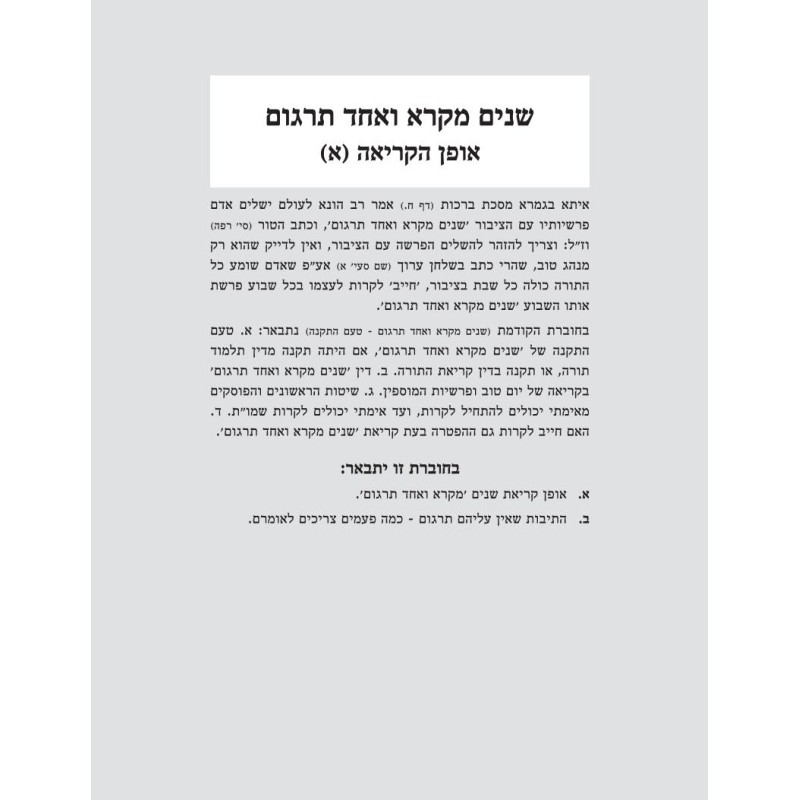
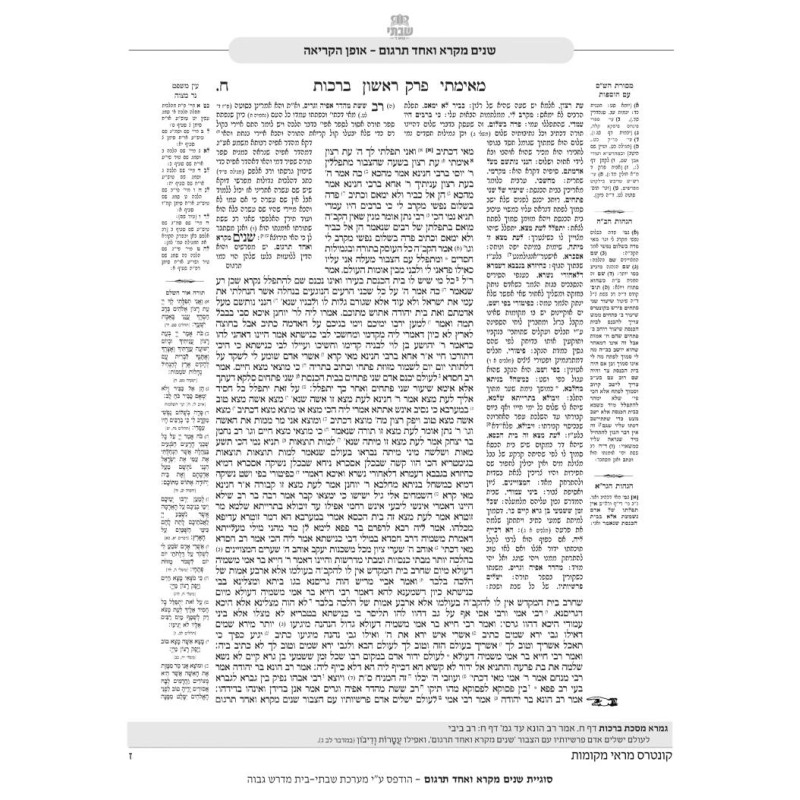
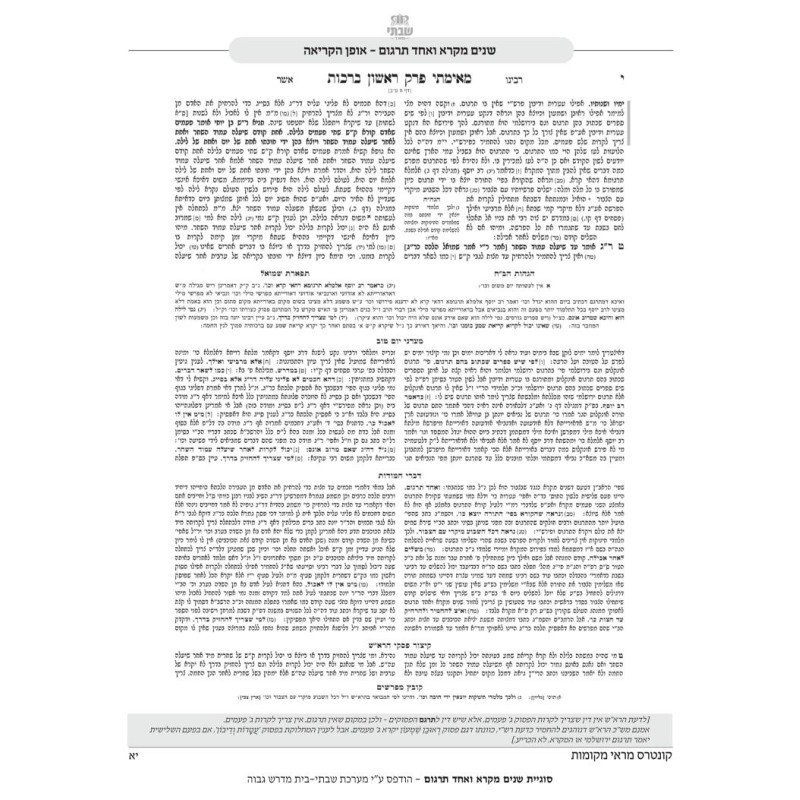
The previous sugya explored the reasons behind the
takana of Shnayim Mikra. This sugya turns to the specific halachos,
focusing on the preferred way to fulfill this obligation.
The takana calls for reading each pasuk twice as mikra and
once as targum. The Rishonim discuss how to understand this requirement: Is the
obligation to read each pasuk three times, with targum serving as the third
reading? Or is it to read the pasuk twice and translate it once?
Some of the questions discussed:
- ·
Is the third reading
required only to translate the pasuk?
- ·
If there is no real
difference between the targum and the pasuk, such as when a pasuk contains only
names of people and places, must one still read it a third time?
- ·
If Targum Onkelos is
identical to the pasuk, but Targum Yerushalmi includes commentary, should one
read Targum Yerushalmi as the third reading instead?
- ·
Should one read each pasuk
twice and then immediately read its targum, or read the entire parsha or perek
twice before reading the targum?
- ·
Is there an inyan to be
ma'avir sedra from a Sefer Torah, and why?
- ·
Can reading along with the
ba’al koreh count as one of the three required readings?
- ·
Can listening to Krias
Hatorah without reading along count as one of the three required readings,
based on the klal of "shomei'a k'oneh"?
- ·
Must the readings follow a
specific order: mikra twice followed by targum, or mikra, then targum, then
mikra?
- · Can one spread the weekly Shnayim Mikra over the course of the week, or is it preferable to read the entire sedra at once on Erev Shabbos?
| Booklet Details | |
| Pages | 44 |
| Published | 5787 |
| Series | Shnayim Mikra |
שנים מקרא ואחד תרגום - אופן הקריאה (א)
- Product Code: 334
- Availability: In Stock
Available Options
Related Products

שנים מקרא ואחד תרגום-טעם התקנה
This choveres of Shnayim Mikra V'echad Targum discusses the obligation to review the weekly Parsha ..