
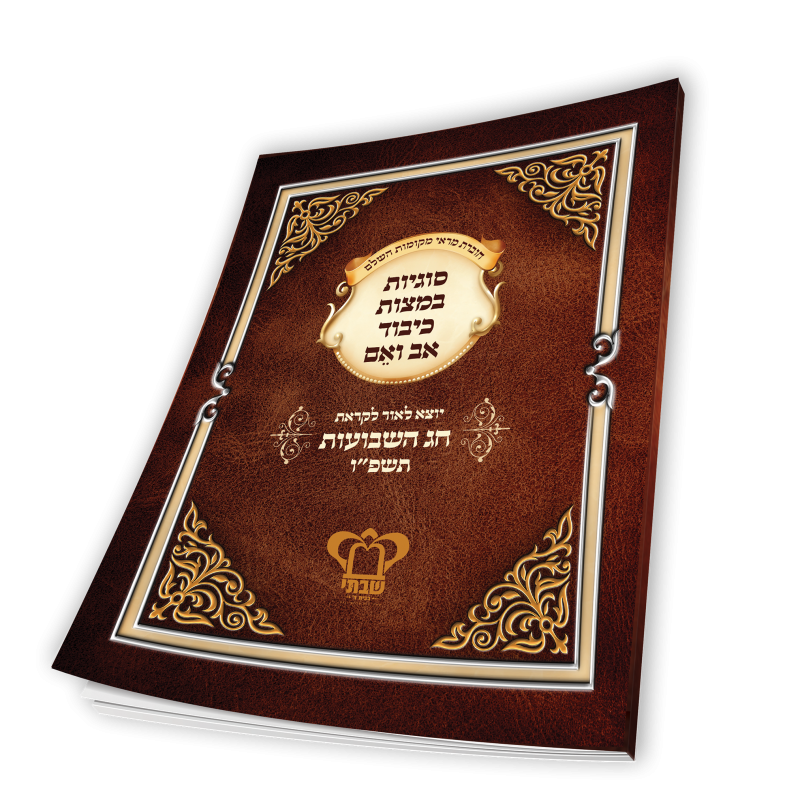
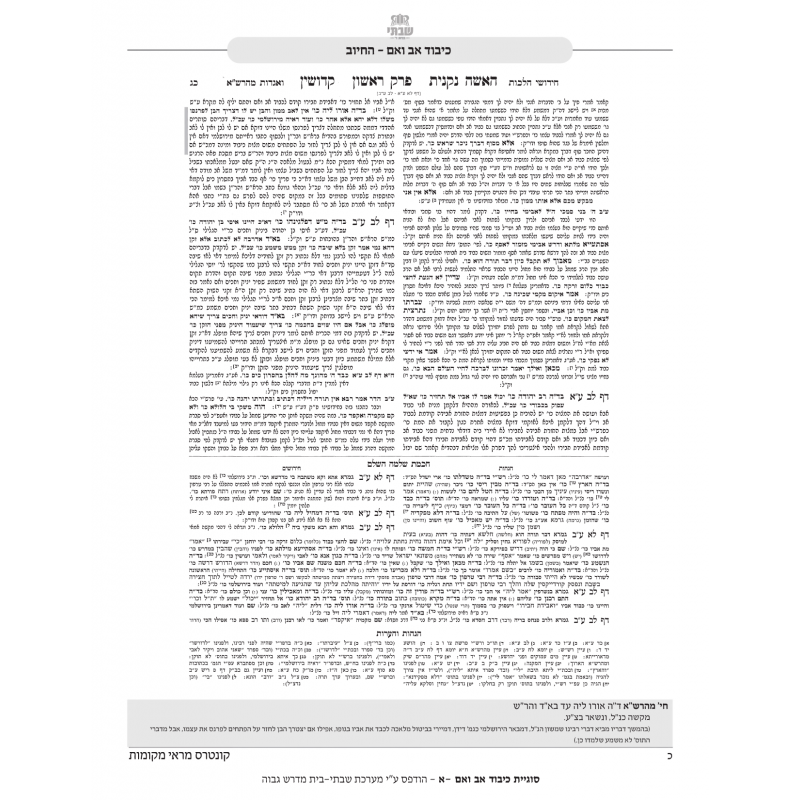
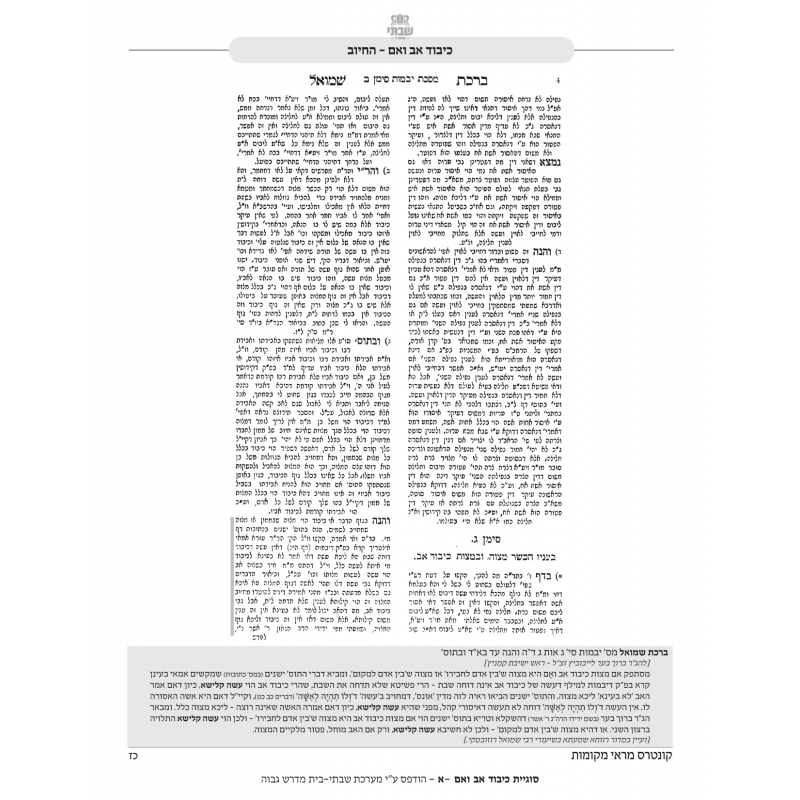
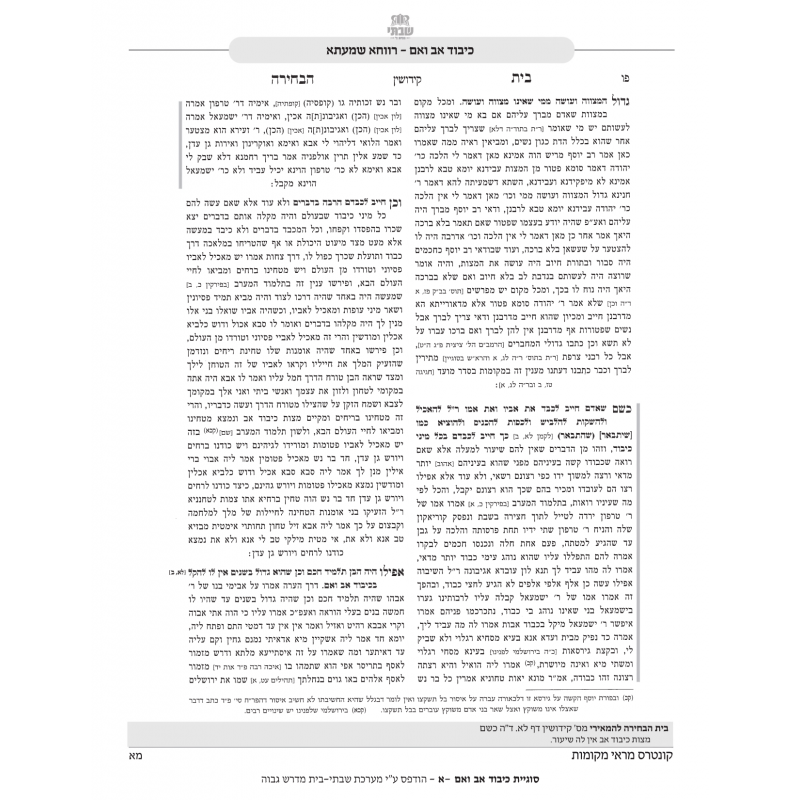
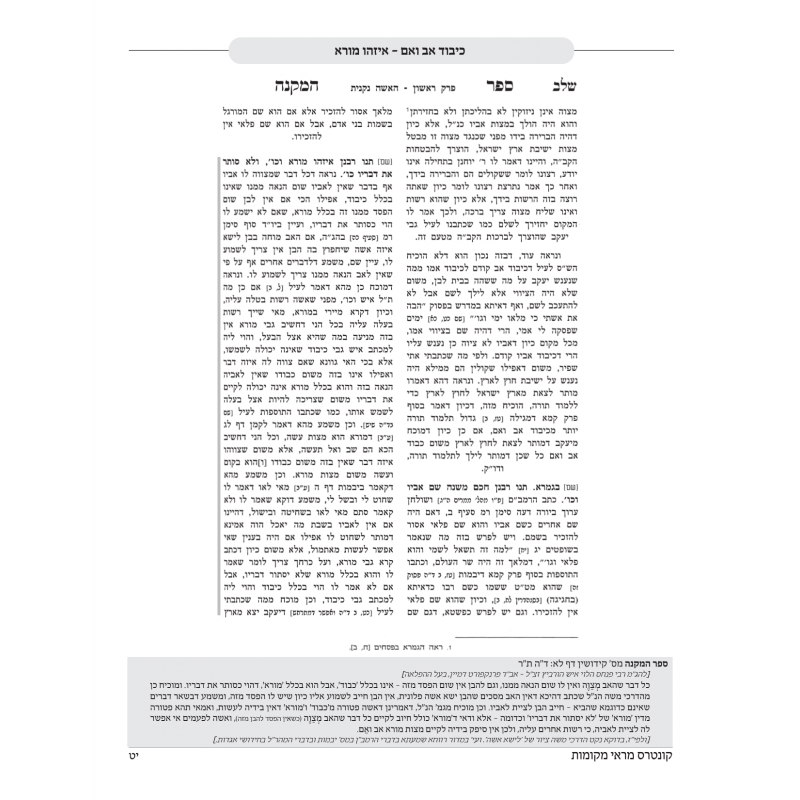
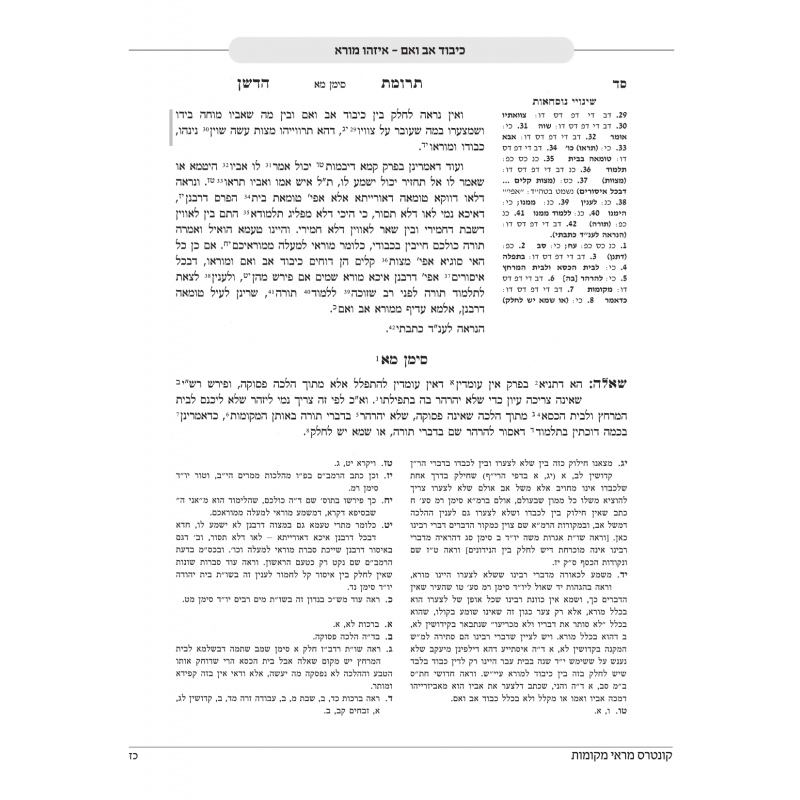
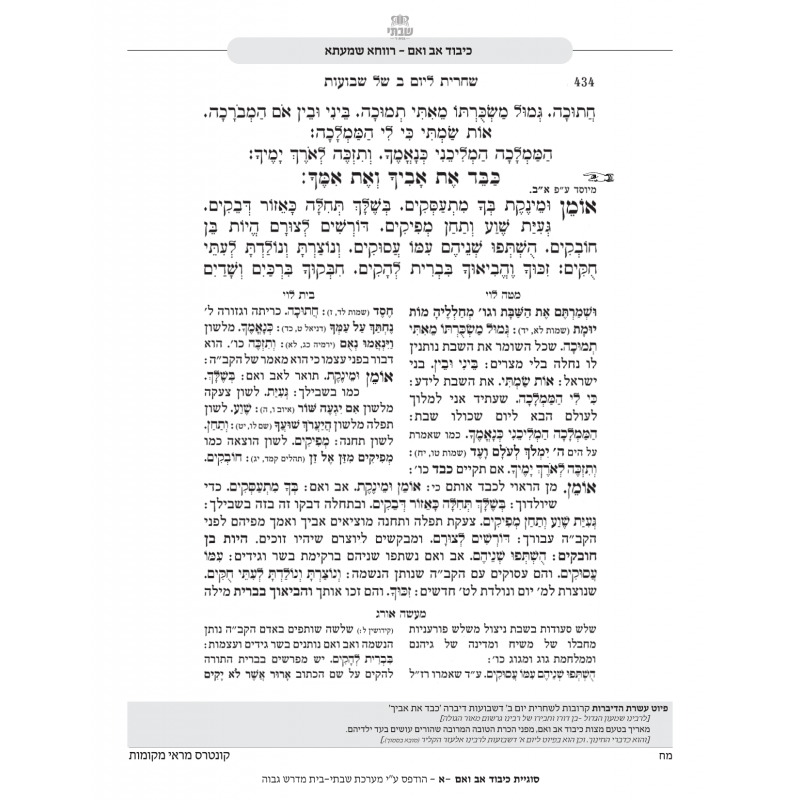
This year’s Shavuos Sugya explores the Halachos of Kibud Av
V’eim.
This most significant Mitzvah is the fifth of the Aseres Hadibros.
Our Chachamim state that the Aseres Hadibros were divided into two parts - the
first five being mitzvos that are Bein Adam L’makom and the last five being Mitzvos
that are Bein Adam L’chaveiro. The Mitzvah
of Kibud Av V’eim is included in the first set (Bein Adam L’Makom), clearly
showing the importance of this Mitzvah, and distinguishing it from a regular “Bein
Adam L’chaveiro” Mitzvah.
There are two components to this Mitzvah: Kibud and Morah (honoring
and revering) – and each category has very specific Halachos. This choveres will analyze each one
individually.
The Mitzvah of Kibud is generally accomplished by “doing”
things for one’s parents to ensure that their physical needs are met. Examples
include providing them with food, drink, taking care of their medical and financial
needs, etc.
The Mitzvah of Morah is generally fulfilled by “not
doing” certain things and by having certain feelings and thoughts regarding
one's parents. Examples include showing
respect by not contradicting them, not sitting in their regular places, etc.
Does the Mitzvah of Kibud Av V’eim fall into the category of
Mitzvos of Bein Adam L’chaveiro or Bein Adam L’makom? (If one was negligent in this Mitzvah, would
he need to ask Mechila from Hashem as well?)
Financial repercussions:
·
Although a child is
obligated to purchase food and feed his parents, may he use the parents’ money
to pay for it?
·
If the child cannot afford
to purchase food, is he obligated to raise funds to feed his parents?
·
What if caring for one’s parents
requires him to take off from work and thereby suffer financial difficulty?
·
Why did our Chachamim
praise Dama ben Nesina for not disturbing his father’s sleep, and thereby suffering
a tremendous financial loss, in order to maintain Kibud Av?
·
Is one obligated to comply
with everything his parents dictate?
·
Does The Mitzvah of
learning Torah take precedence over the Mitzvah of Kibud Av V’Eim?
·
If a son wants to marry a
particular girl who he feels will be a suitable shidduch for him, and the
parents object, does the son need to heed his parents’ demand?
Makom Kavua:
o
If one’s father or mother
has a makom kavua in shul, is it forbidden for a son/daughter to stand in that
spot?
o
May a child sit in a place
in the home that is designated for a parent to sit?
o
May he stand in the place where
a parent sits?
Contradicting one’s parents:
o
Is it prohibited to
contradict a parent?
o
If a parent has a verbal
disagreement with another person, and the child tells the other person “I
concur with your view”, is this considered contradicting the parent?
o
Is this only in the
presence of the parent?
o
What about after the parents’
death?
| Booklet Details | |
| Pages | 100 |
| Published | 5786 |
| Series | Shavuos |
סוגיות במצות כיבוד אב ואֵם
- Product Code: 936
- Availability: In Stock
Available Options
Related Products

תמימות בליל חג השבועות
Please click here to access the current version of this kuntres..

חג השבועות-כתיבת ספר תורה
Explores the Mitzvah of writing a sefer Torah. We will discuss the differences between writing ..

חג השבועות-ברכת התורה
Although the deluxe Shavuos-Birchas Hatorah edition is out of print, the sugyas were printed in thre..

מצות שמחת יום טוב-שמחה בלילות יום טוב
Explores the start of the chiyuv of simcha on Yom Tov, specifically whether the obligation begins a..

כל ישראל ערבים
This deluxe Berkowitz Family Yomtov Edition discusses the concept of Kol Yisroel Areivim Zeh Lazeh -..
היסח הדעת בברכת התורה
This sugya focuses on the obligation to recite Birkas Hatorah. Specifically, we will explain why Bir..

מצות שמחת יום טוב
In this kuntress, we discuss the obligation of Simcha on Yom Tov. In the times of the Bais Hamikdosh..

דין ישראל קודם מתן תורה
One of the aspects of Maamad Har Sinai was an act of Geirus, and indeed Chazal learn many facets of ..

ברכת התורה על שמיעת דברי תורה
This Shavuos sugya focuses on Birkas Hatorah – specifically, one’s obligation to recite Birkas Hato..
הרהור כדיבור ושומע כעונה
This sugya discusses two similar halachic concepts – Hirhur K’Dibbur (i.e. Thinking is conside..