
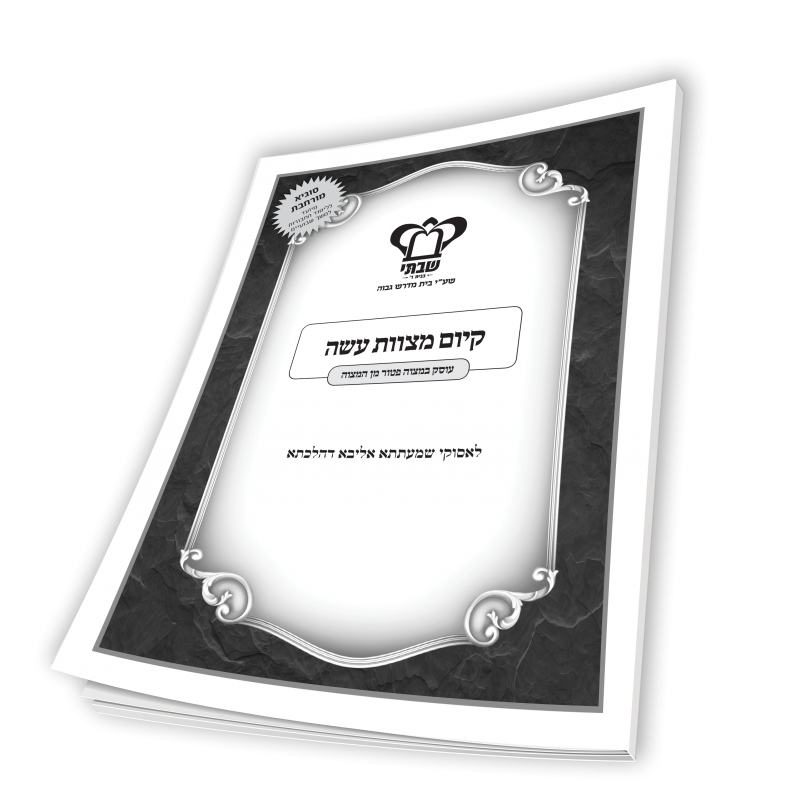
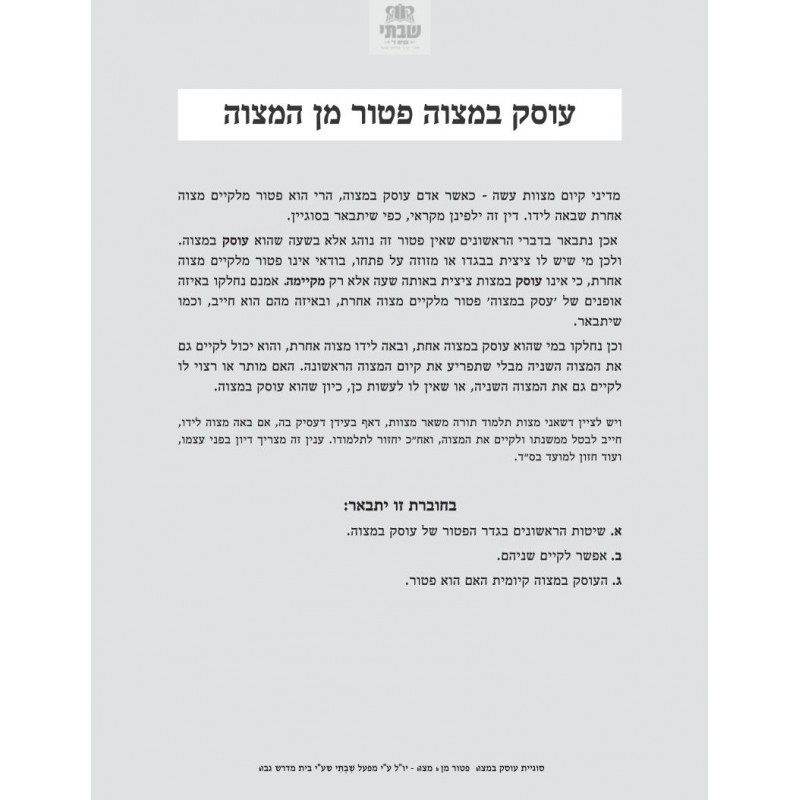
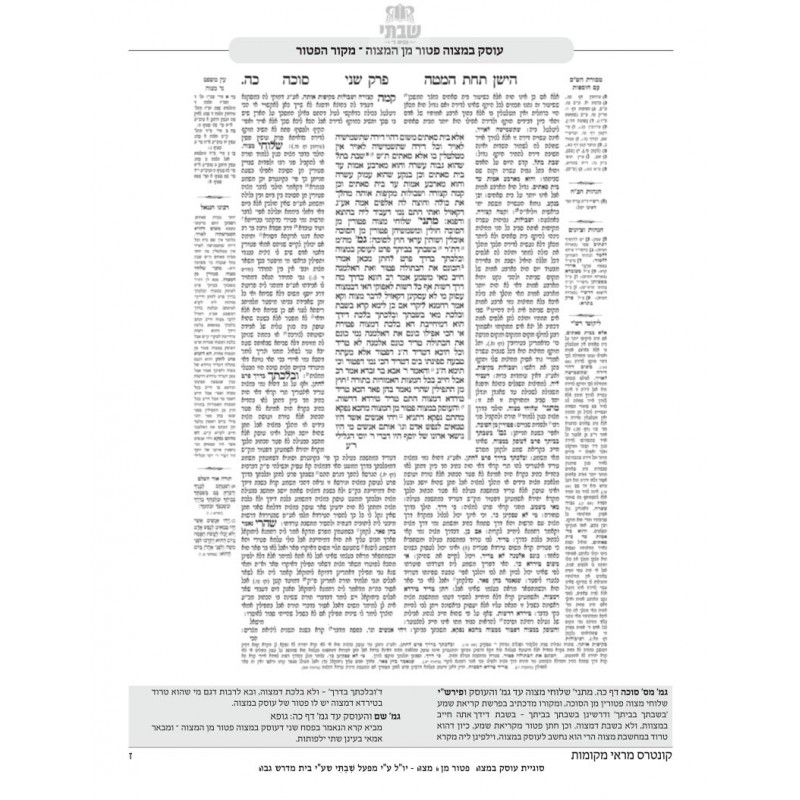
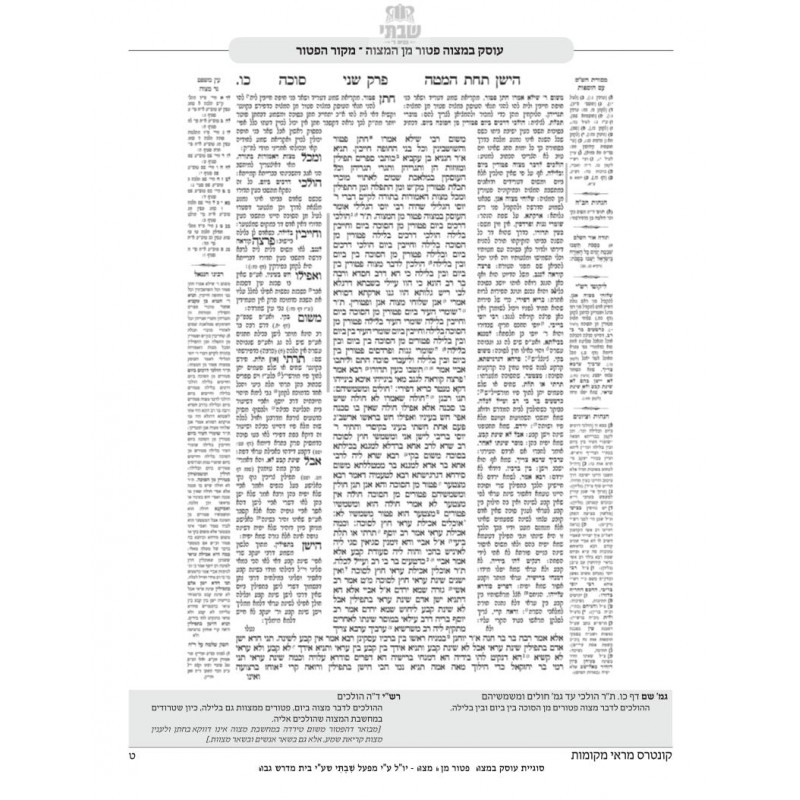
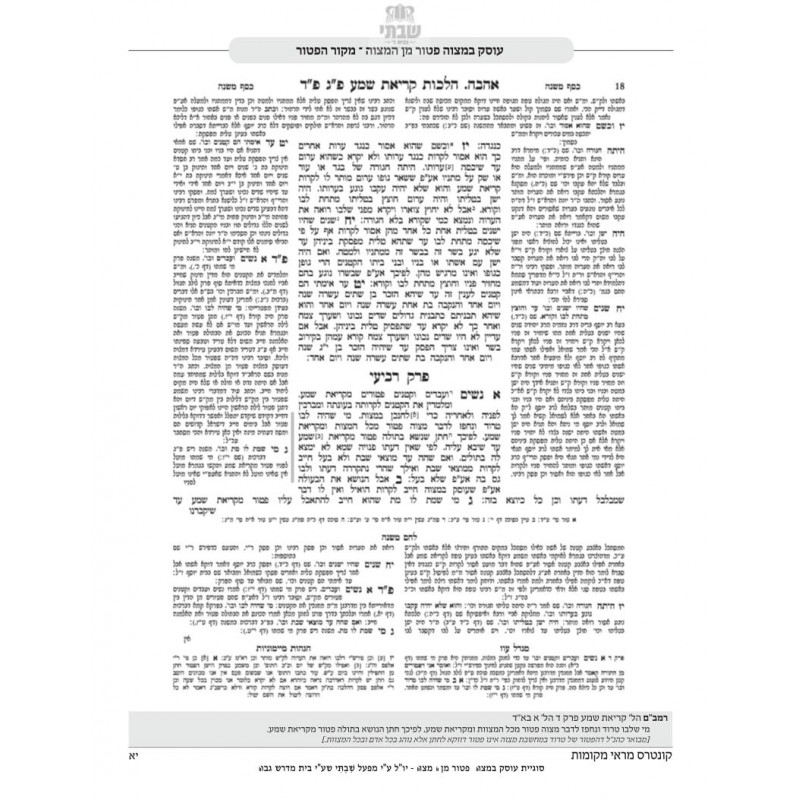
This sugya discusses the common scenario in which one is Halachically exempt from performing all other Mitzvos because he is currently engaged in the performance of a mitzvah.
The source of this principle is derived from the words “Beshivtecha Bevaisecha Uvelechtecha Vaderech”. Chazal explain that the reason these words
are written in the singular (rather than the plural) form is to imply that the
obligation to recite the Shema is only while one is involved in his own
pursuits. However, one who is involved
in a Mitzvah (Osek b’mitzva) is exempt. Hence, the general rule of “Ha’osek B’mitzvah Patur
Min Hamitzvah”.
There are many forms of performing Mitzvos (some more active
and some more passive) and many types of Mitzvos (Min Hatorah, Mid’rabanan, Safek
Mitzvah, etc.). This Sugya analyzes these
various types and how this exemption applies to each. The classic example described in the Gemara is
of one who is guarding a lost object and is therefore exempt from performing
other Mitzvos. By way of example, if
someone approached him for Tzedakah at that time, he would not be obligated to
give.
The question then arises, how “involved” would one need to
be in the performance of a Mitzvah so that he would be exempt from all
others? As in the example above, if one is
simply storing a lost item in his home (hashavas aveidah), does that exempt him
from all other Mitzvos? Or would he need
to be actively doing something to protect that item at that time? If one is wearing a Tallis or Tefillin in Shul,
does that exempt him from the Mitzvah of Tzedakah? Or is one only exempt when the performance of
the second Mitzvah would compromise his performance of the first one? This question is the subject of a debate amongst
the Rishonim, and this Sugya analyzes this debate and the resulting Halacha lma’aseh.
Some of the questions discussed:
- ·
Is the reason for the exemption
because one cannot concentrate on two things at once, or is it a general
exemption?
- ·
What if it’s possible to do
both?
- ·
If one did stop performing
one Mitzvah to do another Mitzvah, is he yotzeh the second Mitzvah? For example, if an Onen said Shema, is he
yotzeh?
- ·
Is a Sofer writing Tefillin
(which is a Mitzvah Kiyumis but not a chiyuv) pattur from other Mitzvos?
- ·
If a Kohen is in the middle
of davening, must he stop to Duchen?
- ·
Is a Tzedakah collector obligated
to daven?
- ·
If one is doing the Mitzvah
Nichum Aveilim and sof zeman Krias Shema is approaching, is he patur or should
he stop and recite Shema?
- ·
Is one exempt from a Mitzvah
Min Hatorah if he is busy performing a Mitzvah Mid’rabanan?
- ·
If one is attending a wedding,
is he mechuyav in the Mitzvah of Tzedakah?
- ·
If one is attending a Chupah
– should he leave to daven Minchah if sh’kia is approaching?
| Booklet Details | |
| Pages | 94 |
| Published | 5786 |
| Series | Mitzvos |
עוסק במצוה פטור מן המצוה
- Product Code: 327
- Availability: In Stock
Available Options
Related Products

אין עושין מצוות חבילות חבילות
Bundling Mitzvos TogetherFocusing on the Talmudic principle of אין עושין מצוות חבילות חבילות ..

אין מעבירין על המצוות
Passing up a mitzvah for the sake of performing another mitzvaFocuses on the Halachic rule of E..
מצוה הבאה בעבירה
Focusing on the concept of Mitzvah HaBa’ah B’Aveirah - a mitzvah which is performed through transgre..