
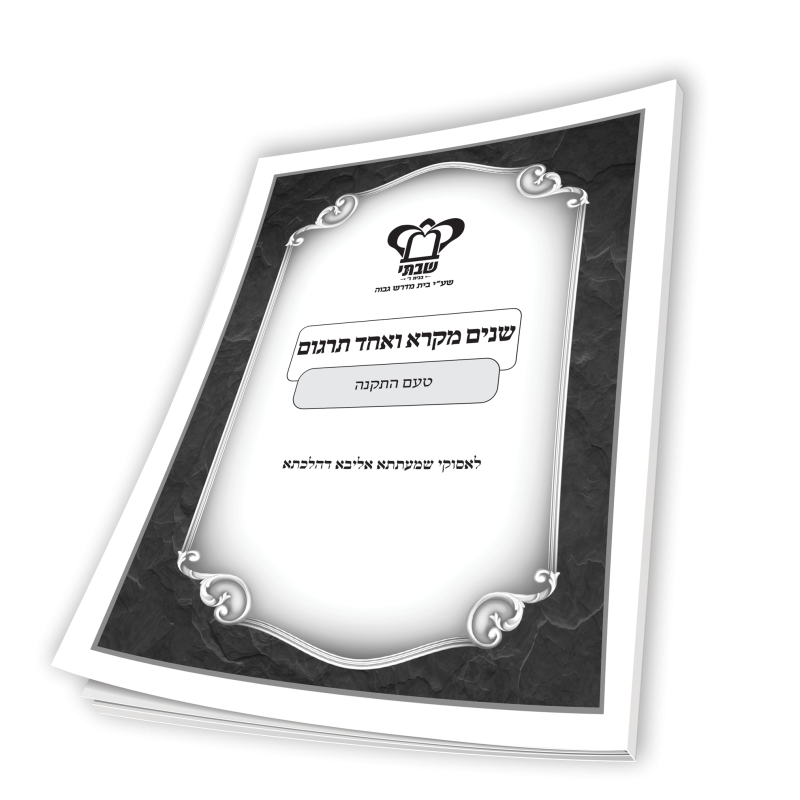
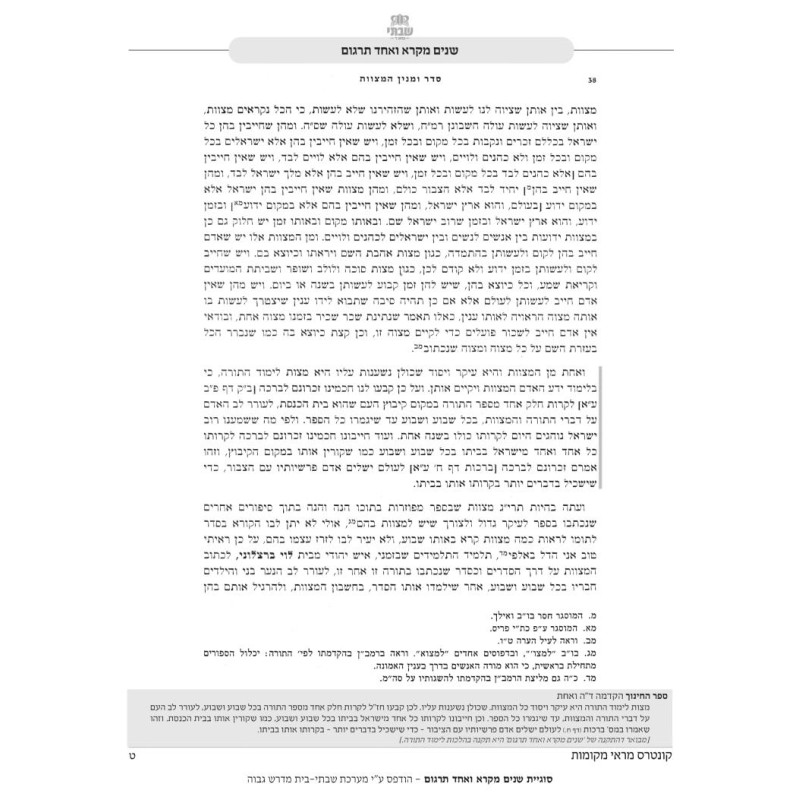
This choveres of Shnayim Mikra V'echad
Targum discusses the obligation to review the weekly Parsha before Krias Hatorah on
Shabbos, twice in the original Lashon Hakodesh and once in the Aramaic Targum
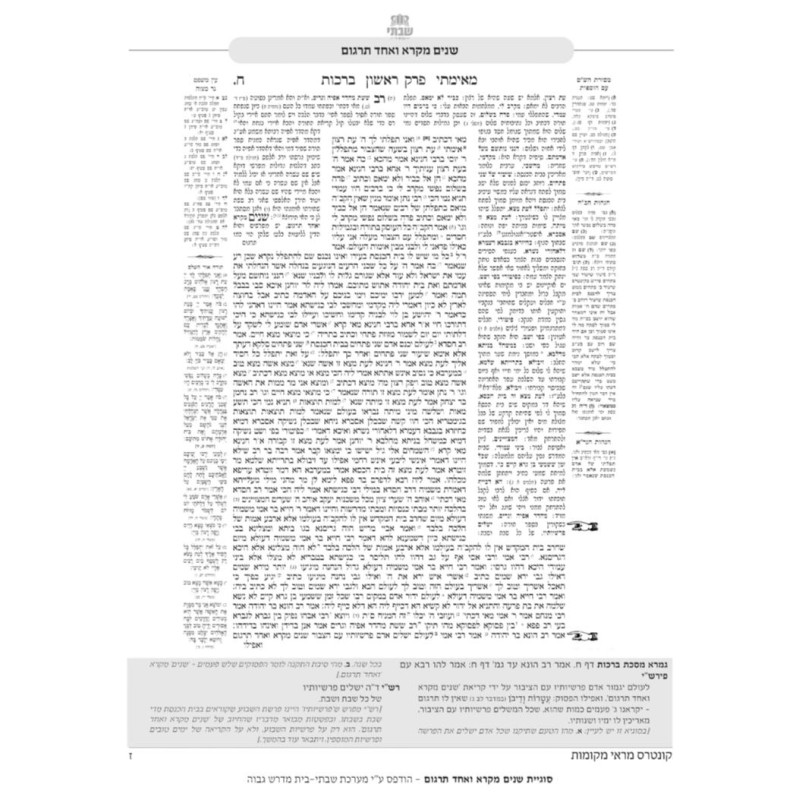
Onkelos. The Gemara in Brachos (8a–b) promises that one who completes his
weekly parsha together with the tzibbur is rewarded with a long life.
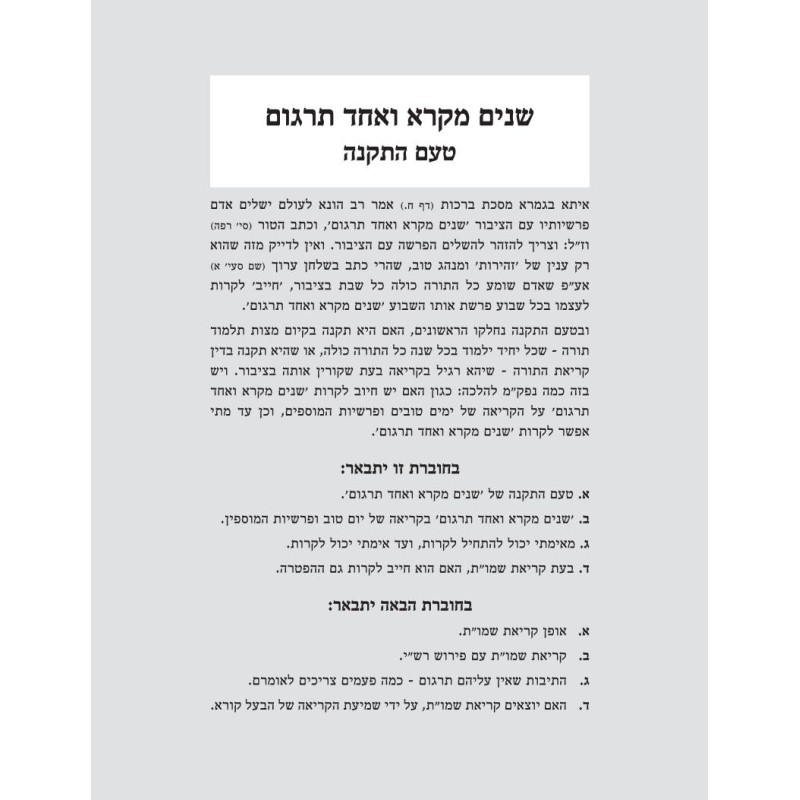
The Rishonim debate the reason for this takanah. Is it so that one completes the learning of the entire Torah shebischsav on a regular annual cycle, and gains a better understanding of it? Or is it specifically tied to the kriah in Shul, so that one becomes familiar with the Krias HaTorah by preparing the material beforehand? This question has various halachic ramifications, as discussed in this sugya.
- What is the reason for this takanah?
- What is the significance of arichus yamim in connection
with Shnayim Mikra?
- Does one need to do Shnayim Mikra on the Yom Tov leining?
- When can one begin, and what is the deadline?
- Does one have to read the haftorah as well?
- Why twice in the original and once in Targum?
- Can one be mashlim on Simchas Torah?
- Why is there a special hiddur to finish before the Shabbos
day seudah?
- Are Bnei Torah also obligated, even though they learn
Torah all week?
| Booklet Details | |
| Pages | 47 |
| Published | 5787 |
| Series | Shnayim Mikrah |
שנים מקרא ואחד תרגום-טעם התקנה
- Product Code: 333
- Availability: In Stock
Available Options
Related Products

קריאת התורה א-הקריאה על סדר הפרשיות ב-דיני תשלומין בקריאת התורה
Krias Hatorah is an integral part of davening. It is arranged so that we complete reading the entir..