


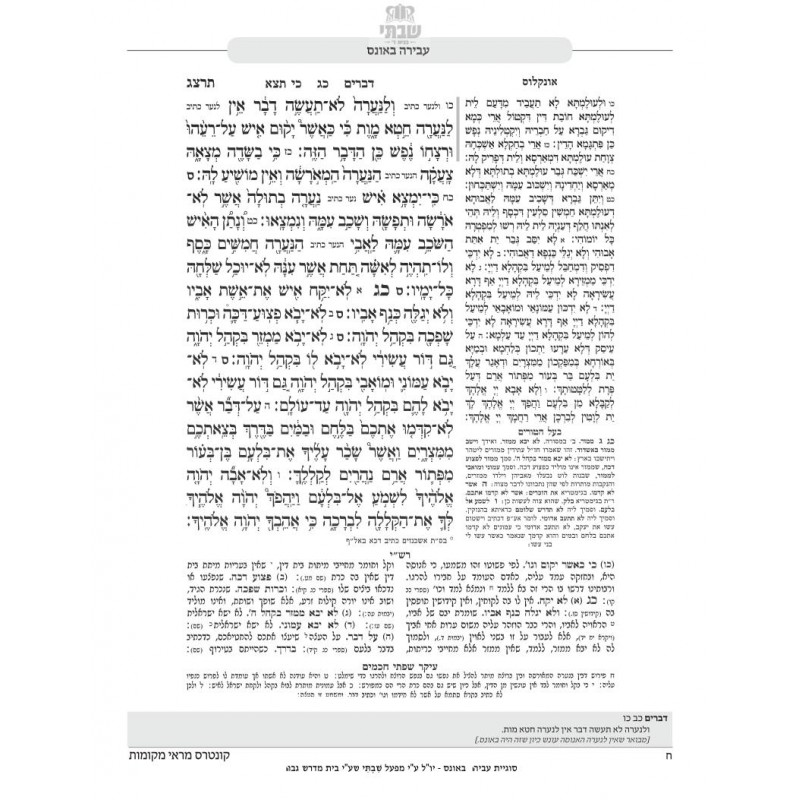

This Sugya explores the Halachic exoneration of one who commits an Aveira B'Oness. The source for this exemption is the Pasuk in Parshas Ki Seitzei that states "V'lana'arah Lo Sa'aseh Davar".
An Aveira that one commits B'Shogeg (unintentionally)
is still considered an Aveira which requires a Korban, while an Oness does not.
However, there is still much discussion as to whether one would still
need a Kapara/Teshuva, and why.
Among the questions discussed:
- ·
The Torah clearly exempts
an Oness from punishment – but are there any spiritual repercussions to the forbidden
action?
- ·
How meticulous does one
need to be, so that he is considered an Oness?
For example, if one relied on a hechsher which was later determined to
be non-kosher, is he an Oness, or should he have researched further before
eating?
- ·
If, for medical reasons,
one is required to consume a non-kosher food or eat on Yom Kippur, is he
considered an Oness for transgressing a mitzvah, or is he fulfilling the
commandment to preserve one’s health?
- ·
If one relied on the
concept of Rov or Chazaka regarding insects in produce, and then found an insect,
is he considered an Oness?
- ·
Is one considered an Oness if he opens a refrigerator on Shabbos assuming
the lights won’t go on?
- ·
If a Kohen is sleeping and a person dies in his house, are we obligated
to wake him up, or is he an Oness?
- · If an Oness is not liable, how do we understand the verse in the Viduy that is said on Yom Kippur confessing to aveiros done through an Oness ?
| Booklet Details | |
| Pages | 63 |
| Published | 5786 |
| Series | Vayovinu B'Mikrah |
עבירה באונס
- Product Code: 328
- Availability: In Stock