

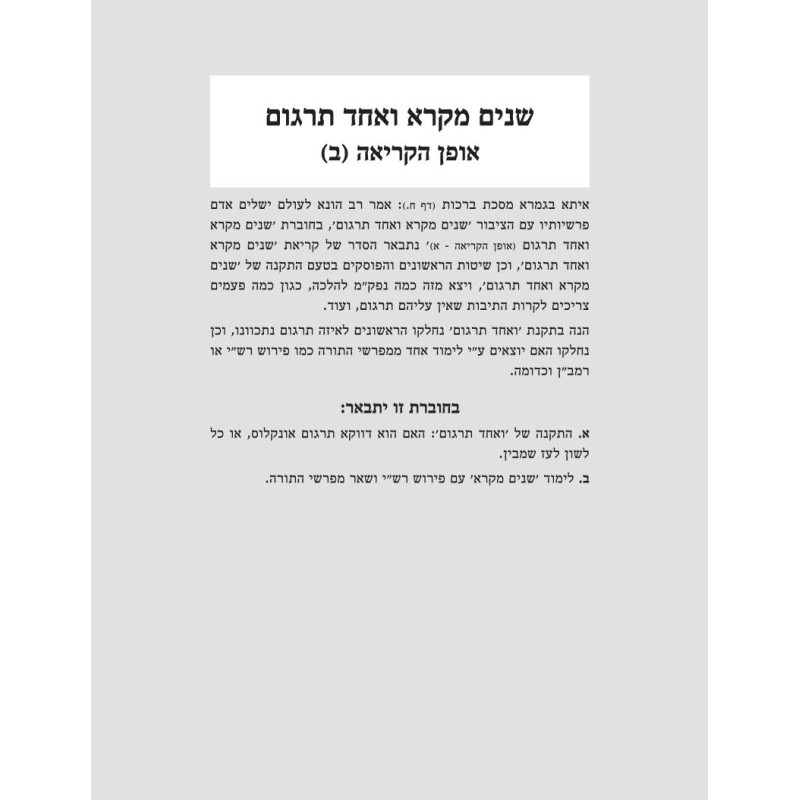
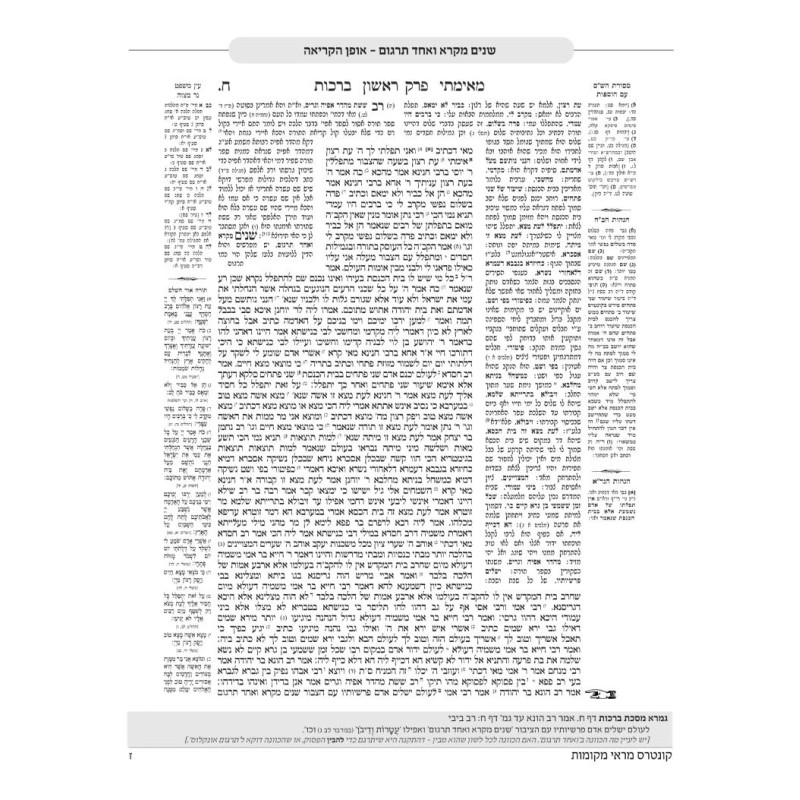
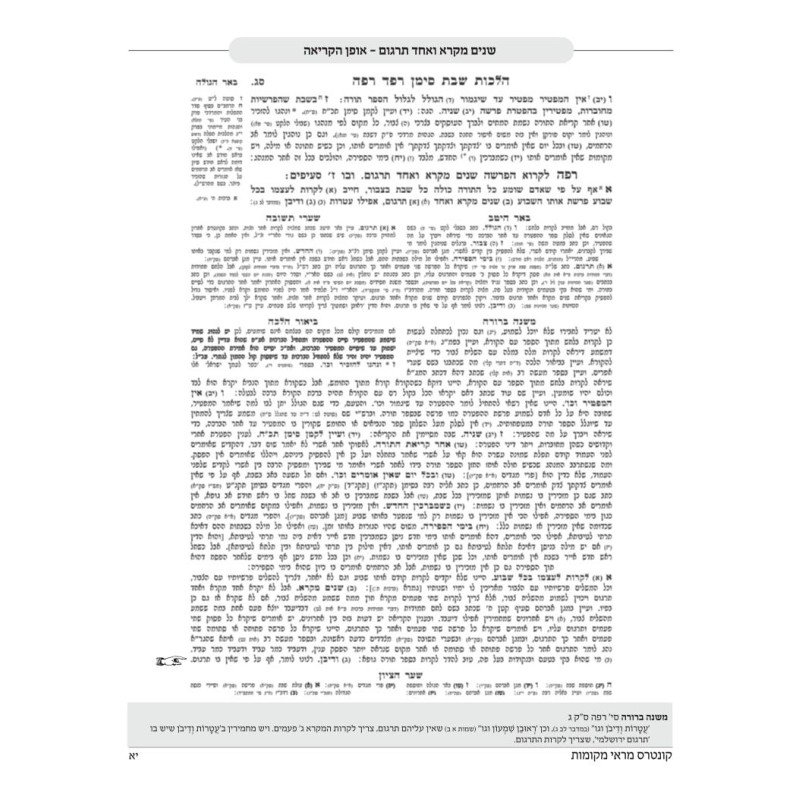
This "Shnayim Mikra sugya" focuses on how to fulfill
the Targum requirement, following our previous sugya on reading the text of the parsha itself. We will explore why the takana calls for Targum in addition to
reading the posuk. Targum, by definition, means translation. Clearly, then,
part of the takana is to gain a better understanding of the Torah, rather than
simply read the parsha.
Some of the questions discussed:
- What
is special about Targum Onkelos? Is its significance that it was given
over at Har Sinai? Is there something unique about Aramaic compared with
other foreign languages?
- Can
Targum Yerushalmi serve as a substitute for Onkelos?
- Can a
translation into another language replace Targum, particularly for those
who understand that language better than Aramaic?
- A
translation into another language typically gives the literal meaning of
the words, while Targum often explains the meaning behind them. Is the
requirement of Shnayim Mikra to translate the Torah, or to gain a deeper
understanding of the words of the posuk?
- Should
one read Rashi in addition to Targum?
- Can
one read meforshim, such as Rashi or Ramban, as a substitute for Targum
Onkelos?
- Does
Rashi take precedence over other meforshim?
The choveres opens with a detailed overview of the various
Targumim found in most Chumashim and their background.
| Booklet Details | |
| Pages | 61 |
| Published | 5787 |
| Series | Shnayim Mikra |
שנים מקרא ואחד תרגום-אופן הקריאה (ב)
- Product Code: 335
- Availability: In Stock
Available Options
Related Products
שנים מקרא ואחד תרגום-טעם התקנה
This choveres of Shnayim Mikra V'echad Targum discusses the obligation to review the weekly Parsha ..
שנים מקרא ואחד תרגום - אופן הקריאה (א)
The previous sugya explored the reasons behind the takana of Shnayim Mikra. This sugya turns to the..